Africa’s Coastlines Are Sinking Into a Rising Ocean, and the Numbers Are Alarming
New UCT research reveals African seas are rising faster than the global average, with the 2023–2024 El Niño triggering the most extreme sea level surge ever recorded on the continent.
Based on research by Dr Franck Ghomsi, Nansen-Tutu Centre for Marine Environmental Research, UCT
Published: March 2026 | Sources: The Conversation, UCT News, Cape Argus
For more than three decades, satellites have tracked the height of the world’s oceans with extraordinary precision. The picture they paint for Africa is deeply unsettling: the seas surrounding the continent are rising faster than anywhere else on Earth — and the pace is speeding up.
A landmark study from the University of Cape Town’s (UCT) Department of Oceanography, published in Communications Earth & Environment, has pulled together 32 years of satellite data to deliver the most comprehensive picture yet of sea level change around Africa. The findings carry urgent implications for over 200 million people living on the continent’s coastlines.
By the Numbers
11.26 cm
Total sea level rise around Africa since 1993
Outpacing the global average over the same period
3.54 mm/yr
Current annual rise rate
vs. global average of 3.45 mm/yr
+73%
Acceleration in sea level rise since 2009
From 2.72 mm/yr before 2009 to 4.70 mm/yr after
2.34 cm
Contribution of 2023–2024 El Niño alone
19% of total rise since 1993, in just two years
Why Are African Seas Rising Faster?
Sea level rise is driven by two main forces: warming ocean water expanding in volume (thermal expansion), and additional water flowing in from melting glaciers and ice sheets in Greenland and Antarctica. Both are direct consequences of human-caused climate change through the burning of fossil fuels.
But Africa’s situation is compounded by its ocean geography. Unlike a static bathtub, the ocean surface is highly uneven. Winds, currents, temperature gradients, and even variations in Earth’s gravitational field mean sea levels can differ by tens of centimetres from region to region. For Africa, a confluence of these factors has created hotspots where the rise is especially acute.
The Western Indian Ocean — including waters off Mozambique, Madagascar, and the Comoros Islands — is experiencing the highest acceleration of sea level rise, at 0.16 mm per year squared with a trend of 3.88 mm/yr. The Eastern Central Atlantic, covering the Gulf of Guinea and coastlines of Senegal, Ghana, Nigeria, and Cameroon, follows closely at 3.90 mm/yr. These two regions are now priority areas for monitoring and coastal adaptation planning.
“We are witnessing a fundamental shift in how the ocean responds to climate variability.”
— Dr Franck Ghomsi, Lead Researcher, UCT Nansen-Tutu Centre
The 2023–2024 El Niño: A Record Nobody Wanted to Break
The research pinpoints a critical inflection point: the 2023–2024 El Niño event produced the largest sea level surge ever recorded around Africa, surpassing even the historically powerful 1997–1998 event — despite the earlier event being considered stronger by traditional measures.
How did this happen? The western Indian Ocean and tropical Atlantic were already abnormally warm entering 2023. This created an elevated baseline. Then El Niño struck an ocean that was already running a fever.
Simultaneously, the normal process of upwelling — where winds push surface water aside, allowing cold, nutrient-rich water to rise from the deep — effectively shut down. Without this mixing, heat became trapped near the surface. The ocean stratified into distinct layers, acting like a lid that locked warmth in and drove sea levels even higher.
The result: thermal expansion alone accounted for over 70% of the exceptional sea level rise during this event, reaching nearly 30 mm across the African marine domain. Ocean heat content during this period quadrupled compared to the 2015–2016 El Niño. In the Western Indian Ocean, levels surged by 3.87 cm in a single year — nearly one third of the region’s entire rise since 1993.
What This Means for Coastal Communities
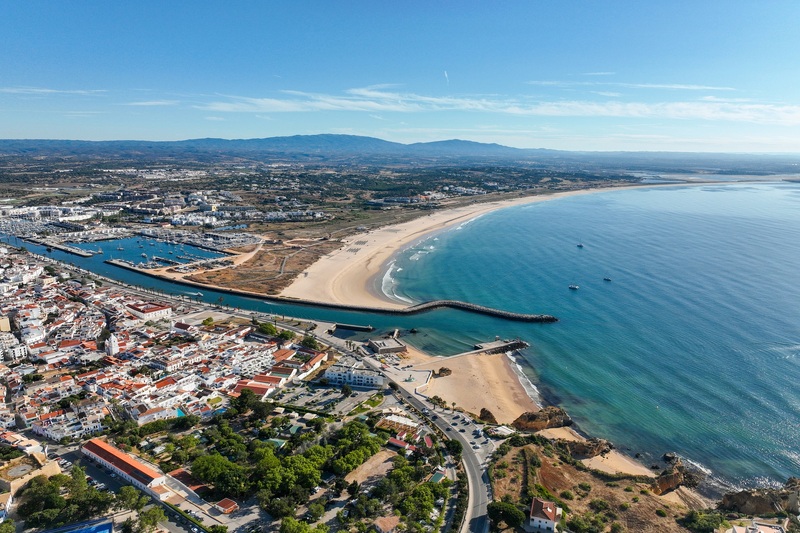
Africa has 38 coastal nations and approximately 30,500 km of coastline. More than 200 million people live near the shore. For these communities, rising seas are not an abstract future threat — they are an accelerating present reality.
Even modest increases in baseline sea level can turn routine high tides into damaging floods, push storm surges further inland, and cause chronic coastal erosion. Saltwater intrusion contaminates freshwater sources and farmland, compounding food and water insecurity in already vulnerable areas.
Cities face mounting dangers. Lagos, home to over 20 million residents, sits on low-lying coastal land increasingly exposed to inundation. Dar es Salaam in Tanzania faces similar risks. Small island developing states like the Comoros and Seychelles are particularly exposed, given their limited land area and elevation.
The crisis extends beneath the surface too. The suppression of upwelling that drives sea levels higher also devastates marine ecosystems. Cold, nutrient-rich water fuels the base of the ocean food web. Without it, fish populations decline — threatening the food security and livelihoods of millions who depend on coastal fisheries across West Africa and island communities.
“Knowing the data is only the first step. We must use this information to drive policy, build resilient infrastructure and protect the vulnerable ecosystems and communities that define our continent’s coastline.”
— Dr Franck Ghomsi, UCT Department of Oceanography
A Compound Crisis — and a Call to Act
One of the study’s most significant findings is how compound effects amplify risk. Long-term warming from greenhouse gas emissions steadily raises the ocean’s baseline. Then, when an extreme event like El Niño occurs, it strikes an ocean already primed for record-breaking behaviour. The combination produces outcomes far greater than either factor alone.
This means that even if a future El Niño is no stronger than past events, its impact on sea levels will be worse — simply because the starting point is now higher. Africa is locked into a pattern of escalating coastal risk.
If the world fails to achieve carbon neutrality by the middle of this century, Africa is projected to exceed 2°C of warming by 2100, further intensifying these risks. The researchers stress that Africa’s coastlines now serve as early warning indicators of compound climate hazards — where the intersection of chronic warming and sudden extremes produces dangers greater than the sum of their parts.
The study calls urgently for expanded ocean monitoring networks, improved early warning systems that integrate scientific and indigenous knowledge, and coordinated regional adaptation strategies across all 38 of Africa’s coastal nations.
What Needs to Happen Now
Monitoring & Early Warning: Africa’s coastlines remain critically under-monitored. Sparse tide gauges and limited observational infrastructure must be expanded urgently.
Coastal Infrastructure: Resilient coastal defences — from sea walls to managed retreats — must be integrated into national planning frameworks across the continent.
Fisheries & Food Security: Marine resource management strategies must account for the disruption of upwelling systems and cascading effects on food systems.
Global Climate Action: Ultimately, protecting Africa’s coastlines requires the world to honour its climate commitments. Local adaptation buys time — only emissions reductions can address the root cause.
Sources
The Conversation — Sea levels around Africa are rising faster than the global average
UCT News — African coastlines face unprecedented sea level surge crisis
Cape Argus — Africa’s coastlines face unprecedented sea level rise due to 2023 El Niño
Original Study — Ghomsi et al., Communications Earth & Environment (2026)
Sea Level Rise | Climate Change | African Coastlines | El Niño | UCT Research | Ocean Warming | Coastal Communities | Climate Adaptation